

The Book of Fly and Other Poems
Graphic poetry, like Twilight Zone episodes! 48 Big Pages! Full Color. Enjoyed by people who don’t like poetry!
Containing the Pushcart Prize-Wining poem, “The Book of Fly.”
Winner of the Elgin Award.
Illustrated by DC/Marvel Comics legend Bob Hall (Batman, Spiderman), Julian Peters, + 8 more! Poems published in Rattle, Asimov’s, F&SF, Strange Horizons, and elsewhere, including Ted Kooser’s newspaper column, “American Life in Poetry,” and at the Poetry Foundation.
“The art is quite charming to the words. I dig it!”
Barry Kelly, director, Star Trek: Lower Decks
“One of the most unique and compelling poems I’ve read in a good while.”
Timothy Green, editor of Rattle, on “The Book of Fly.”
“Fun and groundbreaking.”
Mike Allen, editor, Mythic Delirium Books.
Own “The Book Of Fly”
Digital Copy
Paper Copy
( Shipping in the USA is $3.75. Shipping to Canada is $7, and everywhere else it’s $12)

Stairs Appear in a Hole Outside of Town
The first comic book. Popular and well-reviewed. 24 pages + cover. Color. Used in classrooms from Junior High to College. Really enjoyable! Not many copies left, so Order Now!
Unsolicited comments received in email or found on the internet, mostly from people previously unknown to the author or artists:
“I’m not very good with poetry but I liked this one.”
Pete Bevan, project manager & zombie writer, Worcester, UK
Buy “Stairs appear in a hole outside of town”
Digital Copy
Paper Copy
( Shipping in the USA is $3.75. Shipping to Canada is $7, and everywhere else it’s $12)
About John Philip Johnson
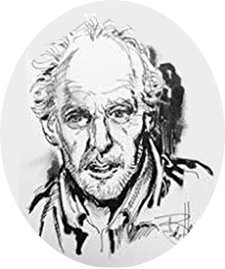
John Philip Johnson is a poet and writer, mostly doing science fiction and fantasy. He has had work published in many journals and magazines, both literary and genre. He has a master’s degree in poetry and teaches college English. He would live on Mars if he could, but only if his wife would go with him.published
Reviews
This is a marvelous idea for making poetry entertaining to a larger audience…My favorite poem here is “After the Changeling Incantation,” which I loved in its entirety, but especially the phrase “filling your wings with sky” and the closing lines. This is a wise, wonderful, wondrous poem, evoking character and situation, and the larger story behind them.I also loved the surreal title poem, “Stairs Appear in a Hole Outside of Town.” The poem leads the reader down the stairs with it, from the specific commonplace details near the start, down to a stranger, larger place. The ending is powerful and perfect.
– Mary Soon Lee, author of CROWNED: The Sign of The Dragon Book 1
Poetry may seem too high-brow for someone looking for a quick and entertaining read, but Stairs Appear does a charming job of inviting the reader to give illustrated poetry a try.Johnson’s poetry includes a variety of speculative subject matter, dipping into zombies, changelings, and ghosts over the course of the collection. Each artist brings a very different style to the poems in the project, and I liked seeing the diverse range of layout and imagery they used to pull the poem and the artwork together into a cohesive whole… Johnson and the chapbook’s artists have given us a great example of where graphic poetry can go, and I look forward to more such collaborations.
– Kate Gorman, author and artist
This is not your ordinary comic book… all of these poems, while quite different from one another in tone or mood, have a quality about them, which worms its way into you and bites you, surprises you or delights you. These are the best sort of narrative poems, which don’t just tell a story but catch you unawares, blow your mind open with a little twist and give you something to ponder.